
Soundscapes and other experimental sonic works
Three Drifts (2026)
A composition using a semi-generative graphic score system built in Max/MSP using basic shapes, realised here on autoharp, piano, and electric guitar. The piece can be played on any group of three polyphonic pitched instruments, and is split into three movements where the score is read slightly differently.
In mv.1 – arpeggios: colour = pitch area of instrument to play, number of sides of shape = number of notes in arpeggio, size = loudness, if the shape is at the top of the grid it’s played slower than the previous arpeggio, if its at the bottom faster; if the shape is at the left of the grid it’s played ascending, and if at the bottom it’s played descending. Mv.2 uses the same rules but instead the players play motifs – improvising a rhythm Mv.3 gets rid of the grid score and each shape represents a chord to be played. The other rules are all applied the same way. Each player plays a chord using information from their shape and then replays it when their instrument’s natural sustain runs out, and repeats as long as the same shape is on the screen.
This piece was developed as part of my final research project at the University of Surrey, so a lot of time and thought went into it, it was great to be able to perform it
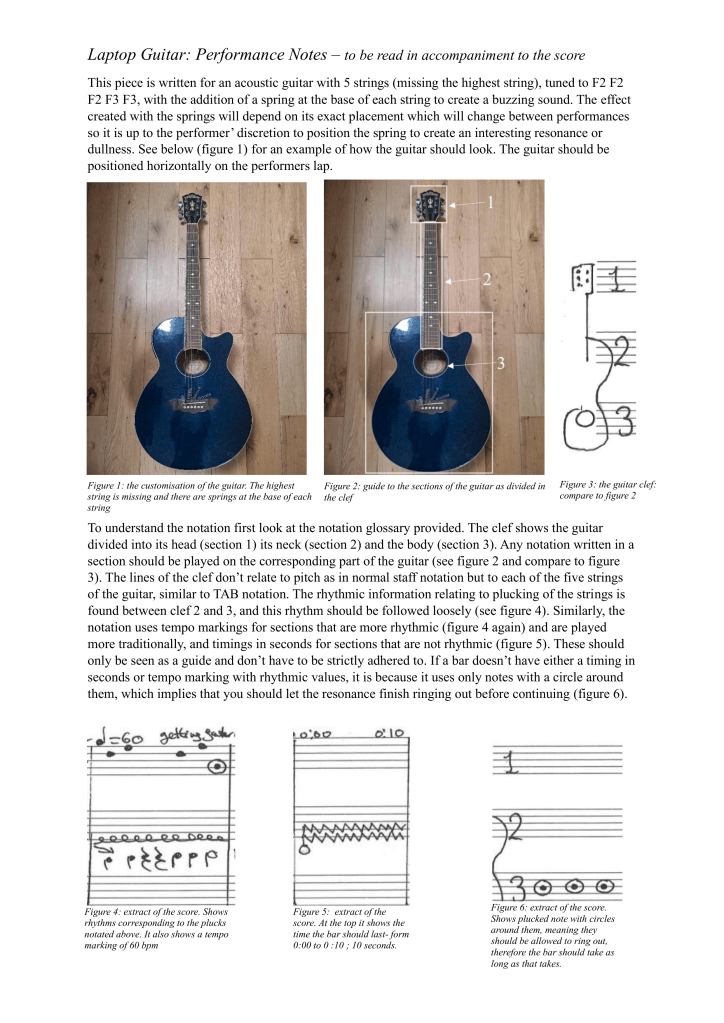
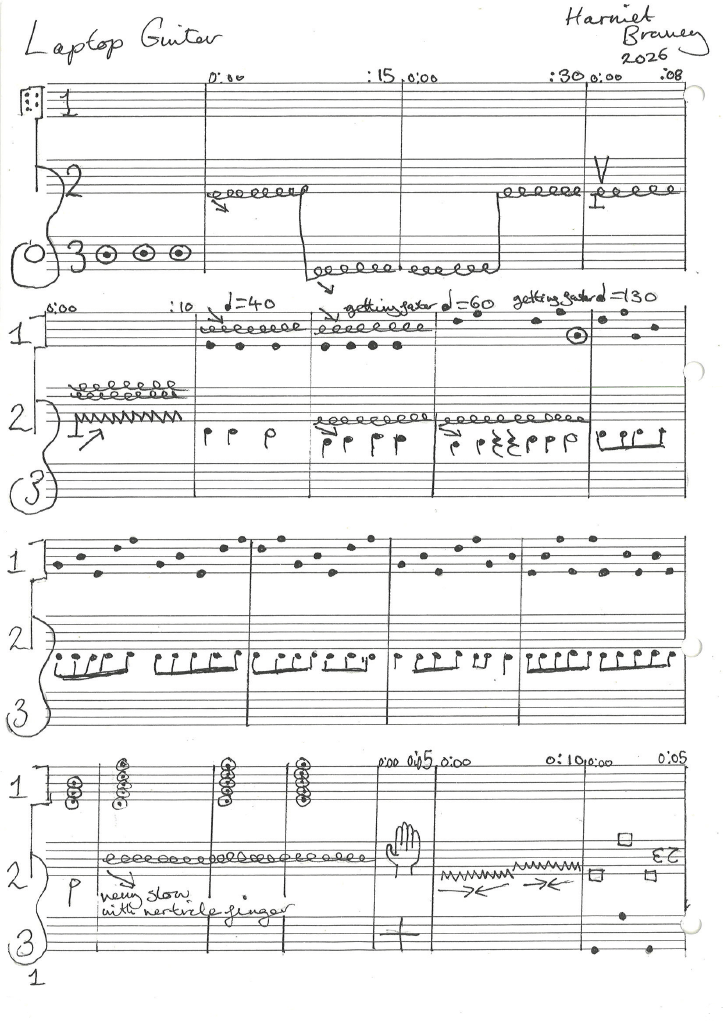
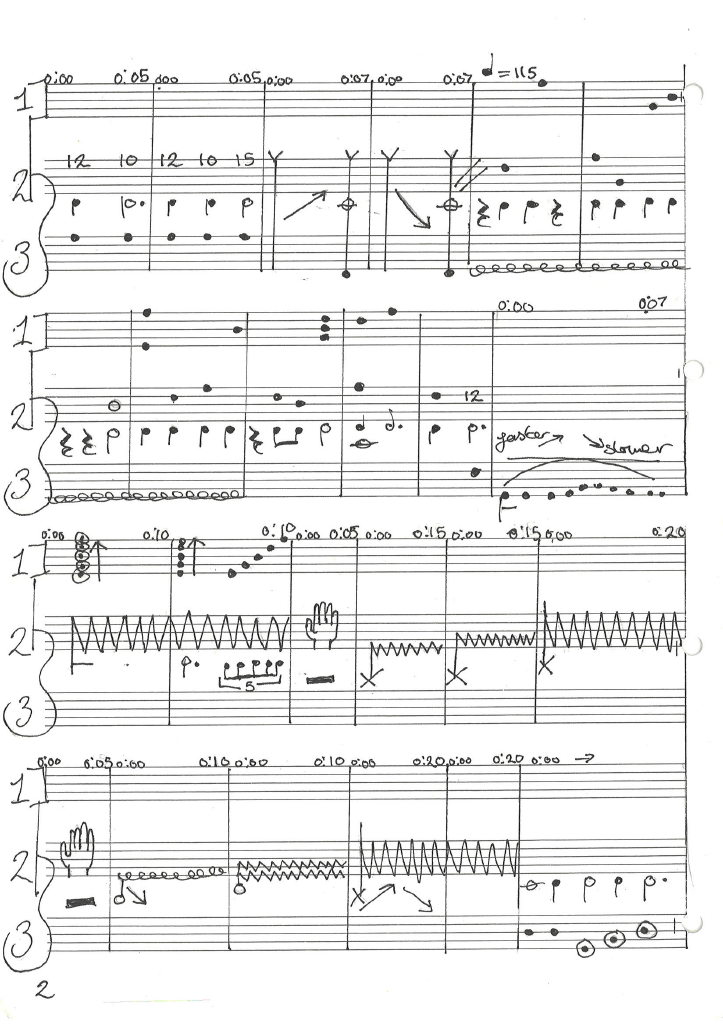
Laptop Guitar (2026)
Drone On Hair Comb, Seashell, And Prayer Bell (2025)
Tiny Clanger (2025)
Experimentation in live no-input-mixing
Buffalo Cloud (2024)
Emergence (2024)
Peace of Music (2024)
Composition using bespoke synth made with Native Instruments’ Reaktor
Found Harmonie (2022)
Commissioned by Moor to Sea Music Collective
 Donyarth Music